Showing posts with label Civil War. Show all posts

Wednesday, March 20, 2013

Available Now! Lover for Ransom by Debra Glass

Release day has arrived! My new historical, Lover for Ransom, is available at Ellora’s Cave in all eReader formats. To celebrate, I’m blogging today, (March 20) with Kerry Freeman HERE and March 21, on Susana’s Parlour HERE. On March 22, I’ll be guest blogging on Silken Sheets and my Romance Writers of America chapter, Southern Magic’s Romance Magicians Blog. There’ll be chances to win a free download, character interviews, author interviews, and some tidbits about where I got my inspiration for my hero and heroine, oh, and my favorite secondary character in Lover for Ransom, an attitudinal horse named String Bean.

loverforransom_msrBlurb -

Lover for Ransom

Debra Glass

Ransom Byrne has been ravaged by guilt since an illness rendered his little sister blind. The former Confederate cavalry officer has resolved to make amends by hiring a Yankee tutor who’ll hopefully restore order to his sister’s life. Once that’s accomplished, he’ll be free to leave Byrne’s End.

From the moment she steps off the train in Tennessee, Cathleen Ryan makes a startling first impression. With her feminist ideas, the irrepressible Bostonian quickly outrages everyone—especially Ransom. He deems the bespectacled teacher too uptight and prim for his tastes. Appearances, however, are deceiving. She tenders decadent proposals that shock and intrigue him, and sultry nights spent submitting to his every illicit request offer them both love and redemption.

But when her steadfast convictions attract the attention of dangerous men, Cathleen risks losing her chance of becoming more than just a lover for Ransom.

Inside Scoop: This nineteenth-century tale contains mild violence, spanking, sloppy puppy kisses, more spanking, fiery suffragette speeches and an attitudinal horse named String Bean.

A Romantica® historical erotic romance from Ellora’s Cave


Click HERE to buy Lover for Ransom in all eReader format at Ellora’s Cave today!

Excerpt -

An Excerpt From: LOVER FOR RANSOM

Copyright © DEBRA GLASS, 2013

All Rights Reserved, Ellora's Cave Publishing, Inc.

“Don’t you ever read anything for pleasure?”

She toyed with the earpieces of her glasses, her mind fixed on the way his velvety drawl had played havoc with the word pleasure. She cleared her throat. “There are far too many important things to read to waste my poor eyesight on frivolities, Mr. Byrne.”

He closed her book, set it on the table and stood. Cathleen flinched as his leg brushed hers when he passed on his way to the bookcase. He opened it and pressed his fingertip to his lips in thought as he perused its contents.

Cathleen studied his casual stance. His weight shifted to one leg and his head cocked to the side. He looked back at her, stared so long it made her insides quiver and then turned back to the collection and removed a slender book from the shelf.

“I shall read to you then,” he said with a smile and he returned to his chair. “To protect your poor eyesight from…frivolities.”

Cathleen gulped as his long fingers opened the book and he thumbed through the pages. It looked like a child’s volume in his hands and she couldn’t help but wonder what he’d chosen.

“Ah, here,” he said, placing his elbow casually on the armrest of his chair to hold the book at a comfortable height. “It was many and many a year ago, in a kingdom by the sea, that a maiden lived there that you may know by the name of Annabel Lee.”

Edgar Allan Poe. Of course she was familiar with the famed Baltimore author. But she’d read his works in braille, and certainly had never heard them read aloud by a man with such a hauntingly husky voice. This night—this moment, with the clock’s pendulum ticking off the seconds in time with the poem’s meter and the flickering glow of the lamp—seemed to be made for the dark, beautifully macabre poem about a woman who’d died before her time.

“For the moon never beams without bringing me dreams of the beautiful Annabel Lee,” Ransom continued.

Cathleen closed her eyes, picturing a pair of young lovers walking hand in hand on a stormy beach. Ransom’s voice transported her and she felt the anguish of the author who’d lost his love only to find himself frequented by her ghost.

“And so, all the night-tide, I lie down by the side, of my darling—my darling—my life and my bride, in the sepulcher there by the sea, in her tomb by the sounding sea.”

Eyes still closed, Cathleen sat in the stillness, absorbing the song contained in the words. When her lashes fluttered open, she was surprised at the tear that traced down her cheek. Blushing, she swept it away. “Very nice, Mr. Byrne.”

He raised his eyebrows in mock warning.

She giggled. She actually giggled. Closing her eyes for a split second, she struggled to compose herself. She was acting like a bashful schoolgirl. “Ransom,” she corrected, her voice but a breath.

In that instant, something had suddenly changed between them and she was at a loss to decipher it.

Staring, he inhaled. “With your hair loose, you reminded me of the woman in that poem.”

Her eyes widened. “Dead?”

He chuckled without mirth. “No. Wild and windswept.”

This time, Cathleen did begin to smooth her hair down.

“No,” he said. “No. Don’t touch it. It’s perfect the way it is.” He must have realized he’d said too much. “I mean, it’s only you and me. There’s no need for pretense.”

Cathleen nodded. Her gaze fell to the brown leather covered book in his hand. “Do you believe such love exists?”

He snorted and closed the book. “This was the fancy of a man who imbibed too much and who thought too much. Love like that is for the young and foolish—for people who haven’t experienced the things I have.”

Cathleen gnawed her bottom lip. “Are you referring to your time during the war?”

He suddenly looked uncomfortable. His big and masculine exterior seemed incongruous with his sudden unease. “Yeah,” he admitted. “I saw and did things no living human being should ever have to see or do. Things that’ll make you hate yourself.”

Cathleen didn’t know how to respond. Newspapers told of the hardships and combat. She’d seen soldiers boarding trains to join the fighting. She’d watched neighbors don their widow’s weeds. She herself had received a telegram informing her that her brother had been killed. But even when the war had come into her very home, it had always seemed a distant thing. But these Tennesseans had lived the war. This man had fought it. Federal troops had occupied their home. While on the train, she’d overheard tales about frightening guerilla raids from both sides, about men who didn’t live by any code of decency, who took what they wanted and killed indiscriminately. These families had lived day to day, wondering if their hard-earned food stores, their homes or even their very lives would be taken from them.

“No,” Ransom continued. “The war was anything but glory.”

Still, Cathleen remained uncharacteristically silent. While she pitied the plight of these people, in her eyes, the war had been a necessary evil, a vehicle through which an entire race had broken the bonds of slavery and declared themselves free. And yet, she didn’t feel free to admit her thoughts on the matter to Ransom Byrne. Not tonight.

“What about you, Cathleen?” he asked, his gaze finding and holding hers, daring her to correct him. “Do you believe in that kind of love?” His tone was almost mocking.

Realizing he’d shifted the conversation back to the poem, she let out a laugh. “Of course not. In fact, I don’t agree with marriage at all and I shall never marry.”

“How did you come to this conclusion?”

“Contrary to what you might think, I haven’t chosen a life of spinsterhood because I am bookish and outspoken, not to mention plain.” She straightened, confused at the way a belief she’d always maintained with pride, now hurt. “No. I simply do not accept as true that a woman should have to marry and live out her days in subjugation.”

“Subjugation?” he asked and then laughed. “I’ve always thought that was the other way around. All the married men I know are pretty beholden to their wives.”

“That’s but a puerile joke. We all know that marriage gives husbands rights to a woman’s livelihood and even her body, if he so chooses to claim them. For a woman, marriage is nothing but legalized…rape.”

This time, both his eyebrows shot up. “That’s a mighty strong word.”

“A married man can demand his rights anytime he chooses. Therefore, if a woman is forced into coitus with him, it is legalized rape.” Cathleen lifted her chin, awaiting an argument. It was a strong word. But he needed to know how she felt about subjugation. She needed him to know it.

Instead, he surprised her. “Don’t you ever feel desire?”

Yes, I’m feeling it this very instant.

Tuesday, February 19, 2013

Lover for Ransom by Debra Glass

A New  Historical Romance Coming Soon!

Lover for Ransom

Ransom Byrne has been ravaged by guilt since an illness rendered his little sister blind. The former Confederate cavalry officer has resolved to make amends by hiring a Yankee tutor who’ll hopefully restore order to his sister’s life. Once accomplished, he’ll be free to leave Byrne’s End.

From the moment she steps off the train in Tennessee, Cathleen Ryan makes a startling first impression. With her feminist ideas, the irrepressible Bostonian quickly outrages everyone—especially Ransom. He deems the bespectacled teacher too uptight and prim for his tastes. Appearances, however, are deceiving. She tenders decadent proposals that shock and intrigue him, and sultry nights spent submitting to his every illicit request offer them both love and redemption.

But when her steadfast convictions attract the attention of dangerous men, Cathleen risks losing her chance of becoming more than just a lover for Ransom.

A Romantica® historical erotic romance from Ellora’s Cave

Read my favorite scene HERE by clicking the magnifying glass at the top right corner of the cover.

*Available March 20, 2013 wherever Ellora’s Cave Ebooks are sold

Ellora’s Cave | Amazon | B&N | ARE

Sunday, December 9, 2012

Researching Civil War History

I majored in history at the University of North Alabama because I thoroughly enjoyed research, reading old diaries, sitting hours at a library scrolling through microfiche, and uncovering firsthand accounts long forgotten.

It’s good I relish a thorough history hunt. Because readers of historical fiction and historical romance are nit-picky about authentic detail, from dialogues to names and dates down to the type of lace that would have adorned a character’s pantalets.

Such accuracy in details transport a reader back in time and bring historical characters to life.

Not only did I participate as a book vendor in one of the largest Civil War Shows, I used the opportunity to research. With over 1000 booths selling and displaying everything from weaponry to period reproduction clothing, the show offered much inspiration.

eartrumpet

This is a Civil War era ear trumpet, used as a hearing aid by the hearing impaired. The tube was made of woven cloth and the bell end was fashioned out of brass.


eyeglasses

Because the heroine in my work in progress is seeing impaired, I was most interested in Civil War era eyeglasses and eye protection. These have tinted lenses designed to shield the eyes from bright light. The earpieces and frame are wire.


hairjewelry

Hair jewelry was a common fad during the Civil War. A soldier departing for war would have given a lock of hair to his sweetheart as a keepsake. Women often fashioned these locks of hair into intricately woven or braided designs they could then wear as an accessory. From The Civil War Parlor -  “Materials such as gutta-percha, jet, black glass,  black enamel, pinchbeck, (a metal that looks and wears like gold but isn’t) and gold were commonly used in the creation of mourning jewelry.”


DSC06202

My daughter, Zoe, with a group of Tennessee Confederates

Living history participants and reenactors pay special attention to the authenticity of their uniforms and accessories.

Most Confederates from mid-1862 on wore a homespun 'butternut' uniform. Butternut took its name from a community of pro-Southern farmers living in the Mid-West, who dyed their fabric in walnut or butternut oil. Butternut was durable and cheaply manufactured throughout the South.

The movies and television have often depicted Civil War soldiers decked out in blue and gray, Federals in blue, Confederates in gray, but wearing otherwise identical uniforms. As Confederates struggled to acquire uniforms at all, this myth couldn’t be further from the truth. Uniforms from both sides came in an array of colors.

The Zouaves added splashes of color to their uniforms. From Gone With the Wind by Margaret Mitchell, “There was one gaudy splash of color among the uniforms that put the girls’ bright finery to shame and stood out in the crowd like a tropical bird – a Louisiana Zouave, with baggy blue and white striped pants, cream gaiters, and a tight little red jacket.”

DSC06204

Zoe with Whitt Barr (descendent of 20th Tennessee’s William J. McMurray who wrote the 20th’s regimental history) dressed in his Zouave Uniform (not visible is the gold tassel on his hat)

Some Federal units wore gray and some Confederates wore blue – which often tragically resulted in “friendly fire” situations.

Confederate soldiers clad in the gray uniform with a matching kepi was something of a rarity.

earrings


Civil War era amber earbobs.


Look for unique and fun ways to research historical romance!

Wednesday, November 28, 2012

Middle Tennessee Civil War Show

Debra will be hosting a table with Heath Mathews, military historian and co-author of the Skeletons of the Civil War – True Ghost Stories of the Army of Tennessee, at the:

Middle Tennessee Civil War Show

When: December 1 & 2, 2012

Where: Williamson County Ag Expo Park, 4215 Long Lane, Franklin, TN 37064

Hours: Saturday, December 1, 9 AM - 5 PM

Sunday, December 2, 9 AM - 3 PM

Admission: Adults - $8 Under 12 - Free

Number of Tables: 1,000

civwarshow

Tuesday, August 7, 2012

Civil War Mourning Customs

weeping_veilDeath in the Victorian era was a complicated thing with complex rituals, and clothing. Strict protocols were observed that required mourners to wear certain items of clothing, colors, and to abstain from particular activities.
Today, we can scarcely imagine the rigid rules and rituals that were brought about by living conditions in the 19th century. Disease was rampant. Sterility was not understood. Diets, lack of vitamins, and nutrients resulted in illness and death. Doctors did not receive the medical training they do today and often, treatments consisted of blistering, bleeding, and poisonous herbal cures that sometimes resulted in fatalities. Germs and antibiotics were unheard of. Many died from simple cuts and childbirth claimed so many lives, that it was customary for a woman to make arrangements for the care of her child should she not survive.
Infections, pneumonia, TB, typhoid, malaria, yellow fever, small pox, and whooping cough could wipe out entire families. Remedies tended toward bizarre superstitions. Burning gun powder in sick rooms, sprinkling houses with vinegar, or placing an ax under the bed to “cut the pain in two” were common practices.
Superstition surrounded death, and in the American South, many of those customs survived into the twentieth century. Some of those beliefs included:
  • Covering Mirrors – During the 19th Century, most funerals were held in the home. Victorians believed that when there was a corpse in the house, all mirrors had to be covered with a black cloth. The Barton Upon Humber Family History Aid website explains that this ensured "that the soul of the departed would not get trapped behind the glass and be prevented from passing to 'the other side,'" Similar to the ancient superstitions, the Victorians also believed that "if you saw your own reflection in a room where someone had just died, then you would soon die yourself."
  • Stopping of Clocks – Pendulums on clocks were stopped at the hour of the deceased’s death to prevent the living family members from having bad luck. Victorians believed that when a person died, time stood still for them in the afterlife and a new period of existence began where the concept of time did not exist. To permit the clock to continue marking time was synonymous with inviting the spirit of the deceased to haunt the home. Stopping time allowed the deceased to ascend to heaven and eternity which is timeless.
  • Carrying the Body Out Feet First – The custom of removing a corpse from a home feet first was derived from the superstition that if removed head first, the deceased could look back into the home and beckon those remaining into death.
  • Photographs of the Deceased – All family photographs were sometimes turned face-down to prevent any of the close relatives and friends of the deceased from being possessed by the spirit of the dead.
  • Wearing Black - The wearing of black is a custom that has been observed for centuries. It was thought to make mourners draw less attention to themselves so that Death would not claim them as its next victim.
Socially, strict and elaborate dress and behavior codes were imposed, sometimes that lasted for several years. Mourning customs have been observed since the 1600s, but it wasn’t until the 1830s and 40s that bereavement became an art form. Scads of books were published on the proper course of mourning and Prince Albert’s death in 1861, and Queen Victoria’s mourning made the practice “fashionable.” Queen Victoria’s impact on mourning customs set the stage for the rest of Western Civilization. She continued wearing her "widow's weeds" until her death in 1901.
That same time period saw the onset of the American Civil War. At least 618,000 died or were killed during the Civil War. Some experts believe the actual death toll reached 700,000. According to Jane Peters Estes, an authority on death customs in Civil War-era America, in the state of Alabama alone, there were over 80,000 widows.
A Victorian woman donned what was known as "widow's weeds" within twenty-four hours of her husband's death. For a year and a day, she wore full mourning which consisted of dull black clothing trimmed with crepe, and a weeping veil.
Mourning women wore a veil in public to shield their tears from onlookers. Estes also stated that, “they believed that spirits of the departed would hover around those they loved. And if a passerby looked directly on the mourner's face, that spirit might attach itself to that person. So, the veil was a protection for the wearer as well as a protection for others.”
Mourning attire became some of the first store-bought clothing items during a time when most clothes were handmade at home. Death could come unexpectedly and the bereaved had to be prepared. Those who could not afford to buy ready-made items paid to have their own clothing dyed or dyed it themselves at home, in the back yard because of the dye's pungent odor. An 1864 diary from Virginia related 'the entire town smells of the dye pots.”
Men wore black or dark colored suits to a funeral and black or white silk hat bands, depending on who had died. If the deceased was a young girl, white silk was worn. They donned a black armband for a few months to a year as a sign of respect. Widowers were permitted to remarry after the wearing of the armband.
Women observed three stages of mourning:  heavy/deep mourning, full mourning, and half mourning.
Mourning observations lasted different lengths depending on the deceased:
  • Spouse: One to 2 1/2 years
  • Parent: 6 months to a year
  • Children over 10 yrs old: 6 months to a year
  • Children under 10 yrs: 3 to 6 months
  • Infants: 6 weeks and up
  • Siblings: 6 to 8 months
  • Aunts and uncles: 3 to 6 months
  • Cousins: 6 weeks to 3 months
  • Aunts or uncles related by marriage: 6 weeks to 3 months
  • Grandparents: 6 months
  • Distant relatives and friends: 3 weeks and up
Deep mourning lasted a minimum of a year and a day but could extend as long as 2 ½ years, in which black clothing, jewelry, veils, bonnets, outer wear, and crepe were worn exclusively. Bonnets and outer wear were covered in crepe for a year and a day, and could after that time be removed. Often the dyes used to color the crepe would run when wet, thus widows did not venture far from home. Mourning fabric was somewhat shiny. Much work went into keeping the black from fading. Among the ingredients used were: ox gall, fuller’s earth, and even egg yolks. Heavy mourning collars and cuffs were black, and marking the second year, a woman could add lace. Hats were forbidden for mourning and instead crepe covered bonnets were worn. Long veils were worn the first year and shortened by the second. Very little, or no adornment was worn.
Underclothes remained the standard of the time, but a black band was sewn to the hem of the outermost petticoat in the event it became visible. Jewelry was not worn for the first few months and thereafter, jet jewelry was permitted. Black glass and India rubber was also used to make mourning jewelry which consisted of rings, broaches, bracelets, lockets, and earrings. Mourning rings served as keepsakes and were provided by the deceased’s family.
During full mourning, gold, silver, jet, pearls, and other stones could be worn. White collars and cuffs replaced black crepe.
Half mourning colors included various somber colors of lilac, lavender, violet, mauve, and gray. Bonnets were also allowed in these colors as well as straw hats.
Time periods were observed where a widow was not permitted to leave her home or receive visitors. After that time, she distributed black edged calling cards to let friends and family know her heavy mourning was over and she could receive visitors. Those in mourning were not allowed to attend parties, weddings, or other social events.
It was considered unlucky to throw one’s mourning attire away after the mourning period was over. The clothes were put away and kept should they be needed again.
Author Sally Painter offers another mourning tradition of the time. “My grandmother had several death announcements that were used before and during this era. They were made out of very thick cardstock that was about 1/8" thick, maybe a bit thicker. The background was black with gold print and a gold ribbon border. Usually a gold cross was centered at the top, but these varied in design.  Included on the card were the name of the deceased, date of birth and death and details about the funeral arrangements. A messenger (usually a young boy) was sent from house to house with the announcement for people to read and then return to him so he could carry it to the next house.”
People during this time feared they would not be mourned properly.
A practice that seems macabre in the modern era is post mortem photography which became popular during the 1860’s. Burial was often delayed for days or weeks waiting for the photographer to arrive. Often this was the only photographic image a family had of a person. Sometimes, these images included painted-on clouds to indicate the picture is of a deceased person. Wreaths of hair from the deceased, called mourning wreathes, were crocheted and laid by the portraits.
pm-2
Widows would often use black bed linens. They were not permitted to marry for at least a year, the thinking being that it took a year for the complete decay of deceased husband.
Older widows tended to mourn longer than their younger counterparts.
To this day, many women consider it disrespectful to wear anything other than black to a funeral or memorial service.
Widows serve as characters in several of my historical romance novels set during the Civil War.


Scarlet Widow

scarletwidow_msr Tough…or tender? If she follows her heart, she won’t have to choose.
Molly has forever lusted for all three Barksdale brothers, but could never choose. Instead, scandal chose for her, and she married the youngest of the three. Then the brothers go to war, and Molly finds herself a grieving widow when her husband is murdered by a merciless band of Union soldiers.
Hardin Barksdale is hell-bent on avenging his brother. Greer Barksdale is honor-bound to protect his home. They both want Molly—and this time, they’re willing to share. The temptation is seductive, the passion sizzling. In harsh, post-war Tennessee, their nightly forbidden trysts wield the power to heal them all—if they can escape the twisted desires of a man bent on seeing all three of them dead.
Digital Ebook
 

Bought and Paid For


Unable to support herself and her beloved servants, Widow Carrie Hatcher contemplates the unthinkable—offering her services for money. Forced to board wounded Colonel Wesley McEwen, Carrie vows to make the striking Confederate soldier her first “client”.
But Carrie gets more than she bargained for when she agrees to comply with Wesley’s every illicit request for one week. Throughout long, sultry nights, Wesley tutors Carrie in every position, every skill, of her illicit new trade. From dark taboos to pleasurable punishments, Carrie becomes his willing pupil. Passions inflamed, the couple becomes more scandalously intimate but Carrie realizes she wants to give him far more than just her body. The colonel, however, may be too haunted by his past to risk accepting more than he’s bought and paid for.
Digital Edition
 

Rebel Rose


They say she’s a Rebel spy…
Widow, Rosalie O’Kelley, is not above using her feminine wiles to secure much needed supplies for her fellow townspeople. But when Union Colonel Eric Skaarsberg is put in charge, Rose’s usual tactics fail miserably. In exchange for supplies, she comes to a scandalous arrangement with him. She agrees to become his willing plaything—to fulfill his every physical need…eagerly and without hesitation.
Eric Skaarsberg is duty bound to ferret out the spy who has been leaking information to the Confederates. All evidence points to the passionate belle who readily responds to every touch and taste he metes out to her. One by one, he strips away Rose’s secrets, but Eric is not satisfied with owning the she-Rebel’s luscious body. At any cost, he must uncover her vulnerable and perilous past—even if it means the destruction of them both.
Digital Edition


Sunday, May 20, 2012

Commemorate the 150th Anniversary of the Civil War With a Historical Romance by Debra Glass

The American Civil War celebrates its sesquicentennial in 2012. Those turbulent years between 1862 and 1865 were a defining moment in our nation’s history. While the Revolutionary War created the United States, the Civil War determined what sort of nation the US would be. The Civil War answered two fundamental questions: Was the United States a confederation of sovereign states or an indivisible nation with a strong national government? And; Would a nation, founded on a declaration that all men were created equal continue to operate as the largest slaveholding country in the world?

Union victory in 1865, preserved the United States as one nation and abolished the institution of slavery. This win came at the cost of 625,000 lives.

In 1936, when Margaret Mitchell’s sweeping novel, Gone With the Wind, set during the American Civil War, was published, a worldwide love affair with historical, romantic fiction was born.

Visiting Margaret Mitchell's House in Atlanta

Visiting the Atlanta house where Margaret Mitchell wrote Gone With the Wind

As a southerner, I grew up around the relics of those once grand plantation homes, amidst historic markers detailing skirmishes and Hood’s march toward the ill-fated battles of Franklin and Nashville. I heard stories from my great-grandparents about their parents who fought on both sides. I attended college in the South and graduated with an MAed with emphasis in – what else? – history!

My interest in history has always colored my writing. From my locally popular Skeletons in the Closet ghost story collections, to numerous articles for Fate Magazine, and varied Civil War history magazines, to my romantic fiction, the Civil War continues to inspire me.

When I began writing romance, it was no wonder I most often turned to the Civil War for my historical settings.

Here’s what reviewers are saying about my Civil War romances:

“Ms. Glass did an outstanding job of recreating the old South with heart-wrenching visual images of what was going on in and around war ravaged Georgia. Marietta is a perfect backdrop to represent the suffering endured by both soldiers and citizens. It is symbolic of the war torn states as well as the war torn hero and heroine.” ~ Long and Short Reviews

“The strength of Ms. Glass’s writing draws the reader into her deeply emotional and moving love stories time and time again. By intertwining passion and history overlaid with a great depth of emotion and laced with a relentless increasing level of sensuality between Greer, Molly and Hardin the reader is treated to dark and utterly seductive story that pulls-at-the-heartstrings!  Set during the Civil War, Scarlet Widow gives the reader a gripping, detailed and vividly descriptive look at the heartache, hardships and cruelties of war, Molly and the Barksdale brothers experienced that forever changed their lives.  The historically filled pages are brimming with tension, hope and courage, richly portrayed in such a way that the reader will have a difficult time putting this story down. ” ~ The Romance Studio

“Ms. Glass does a beautiful job of bringing the harshness of the Civil War to life in Florence, Alabama. I found this especially interesting since Alabama is seldom used as a plot setting for a civil war romance. The history … illustrated the awful external and internal conflicts Rose and Eric were facing.” ~ Long and Short Reviews

“I love Glass's erotic romances because they're magnificently written and they're often so much "more" than erotic romance. I love her Civil War/Reconstruction fiction because she loves her subject and loves her readers enough to tell them honest, gritty stories with characterizations and issues genuine to that time. Glass immerses readers into culture, society, and events with delectable word pictures and action. Sensory details and exquisite world-building transport willing readers to the realities of a lost time.” ~ MA Goodreads

Revisit the Civil War with one of my books!

Gatekeeper

Book one in the Phantom Lovers series.
Evil shadow ghosts known as soul collectors haunted her childhood nightmares, so Nashville PD criminal profiler Jillian Drew did everything possible to turn her back on her psychic abilities. But now her eccentric sister has been abducted and nothing in her criminology background has prepared Jillian for that tragedy — or for Benton Smith, the powerful and devastatingly attractive ghost of a Civil War officer and the only witness to Amy's abduction.
Fearful of the brazen specter, Jillian nevertheless needs him. Benton is her Gatekeeper, a spirit sworn to protect her from the soul collectors, who attack each time she unleashes her long-dormant psychic senses in an attempt to find her sister.
Yet she must somehow keep the devilishly seductive spirit at arm's length, for Benton's soul is at stake — and succumbing to his desires could have dangerous consequences for them both.


Bought and Paid For

Unable to support herself and her beloved servants, Widow Carrie Hatcher contemplates the unthinkable—offering her services for money. Forced to board wounded Colonel Wesley McEwen in her home, Carrie vows to make the striking Confederate soldier her first “client”.

But Carrie gets more than she bargained for when she agrees to comply with Wesley’s every illicit request for one week. Throughout long, sultry nights, Wesley tutors Carrie in every position, every skill, of her illicit new trade. From dark taboos to pleasurable punishments, Carrie becomes his willing pupil.

Passions inflamed, the couple becomes more scandalously intimate but Carrie realizes she wants to give him far more than just her body. The colonel, however, may be too haunted by his past to risk accepting more than he’s bought and paid for.


Rebel Rose

They say she’s a Rebel spy…

Rosalie O’Kelley is not above using her feminine wiles to secure much-needed supplies for her fellow townspeople. But when Union Colonel Eric Skaarsberg is put in charge, Rose’s usual tactics fail miserably. In exchange for supplies, she comes to a scandalous arrangement with him. She agrees to become his willing plaything—to fulfill his every physical need, eagerly and without hesitation.

Eric is duty-bound to ferret out the spy who has been leaking information to the Confederates. All evidence points to the passionate belle who readily responds to every touch and taste he metes out. One by one, he strips away Rose’s secrets, but Eric is not satisfied with owning the she-Rebel’s luscious body. He must uncover the truth of her past at any cost—even if it means the destruction of them both.


Scarlet Widow

Tough…or tender? If she follows her heart, she won’t have to choose.
Molly has forever lusted for all three Barksdale brothers, but could never choose. Instead, scandal chose for her, and she married the youngest of the three. Then the brothers go to war, and Molly finds herself a grieving widow when her husband is murdered by a merciless band of Union soldiers.

Hardin Barksdale is hell-bent on avenging his brother. Greer Barksdale is honor-bound to protect his home. They both want Molly—and this time, they’re willing to share. The temptation is seductive, the passion sizzling. In harsh, post-war Tennessee, their nightly forbidden trysts wield the power to heal them all—if they can escape the twisted desires of a man bent on seeing all three of them dead.


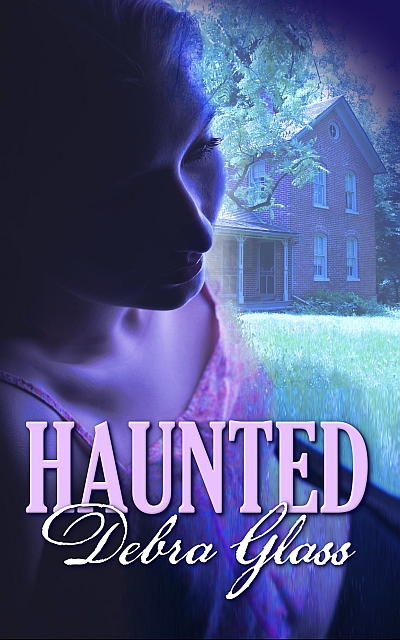
Haunted

Can a heart still love once it stops beating?

My hopes of having a normal life died when I did. Especially since my near death experience turned me into a clairvoyant with a disfiguring scar. Not exactly most-popular material.

Now, because of me, my whole family has been forced to move to some small town in Tennessee. My parents think a quiet new school and a new set of friends will heal me of the scars I carry both inside and out.

There’s just one problem. I’m being haunted by Jeremiah Ransom, the charming ghost of a Civil War soldier who lived and died in my house. His presence makes me feel perfect. As if there’d never been a wound in the first place.

But I’m afraid that loving him will result in my death all over again.


Skeletons of the Civil War

Ghostly legends abound wherever history has made its mark. Skeletons of the Civil War follows the ghosts of the Army of Tennessee from the bloody Battle of Shiloh to its decimation on the killing fields of Franklin. Combining the craft of a story-teller (Glass), with the expert knowledge of a military historian (Mathews), the stories in this book are packed with archival photographs and intriguing first-hand accounts. Read fresh, spine-tingling accounts of a headless horseman who gallops through the eerie cedar glades at Stones River, the tale of the regiment which earned the nickname The Bloody Ninth at Shiloh, the phantom regiment at Resaca, the spirit of Tennessee’s dashing Boy General, who followed a woman home, the mysterious empty graves near the Hazen monument, weirdness at The Dead Angle, true accounts of spirits who haunt the cavernous rooms of Tennessee’s grand plantation houses, the tragic tale of Captain Tod Carter who was shot down within sight of his home, and many more.

Haunted Mansions in the Heart of Dixie

There is something about an antebellum mansion that whispers ghost. From the rolling cotton fields of Colbert County, Alabama to the haunted hills of Tennessee, there is hardly a pre-Civil War dwelling that cannot boast of some resident spirit or similar unexplained phenomena.

Steeped in history, Haunted Mansions in the Heart of Dixie is a collection of true Southern haint tales set in the fertile Tennessee Valley. From the mysterious Bell Witch to the inexplicable events at Belle Mont Mansion, these tales recount some of the most infamous Southern hauntings of all time. Explore the dark history of Dixie with spirits who loved their homes so much that even in death they refuse to leave, and unearth other more diabolical specters hell-bent on the settling of old scores.


All the tales within are authentic. Proceed, therefore, into the haunted Heart of Dixie with caution. . .

Monday, November 3, 2008

Bought and Paid For by Debra Glass - Coming in 2009 from Ellora's Cave's Legends Line


Too young to be widowed, Carrie Hatcher has always been a proper lady. But since her husband’s death, she has found herself penniless and unable to procure a doctor for her beloved ailing servant. It seems strikingly handsome Confederate Colonel, Wesley McEwen, is the answer to her prayers. He offers Carrie an exorbitant amount of gold for her services—if she will but agree to comply with his every illicit request.

No man has ever inflamed Carrie’s passions the way Wesley does but soon, she discovers her amorous lover is haunted by more than the horrors of the war. As they become more scandalously intimate, Wesley must decide whether he should walk away from the woman he has grown to love or to face his fears in order to gain far more than he’s bought and paid for.
Watch the trailer for Bought and Paid For!